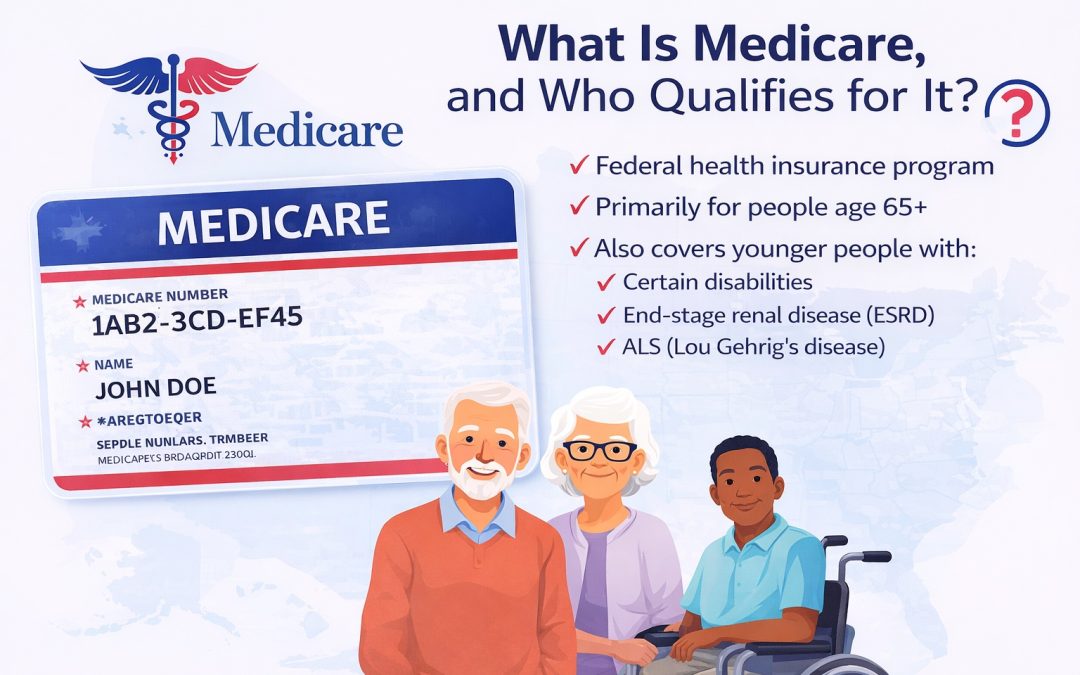
Medicare is a federal health insurance program designed to provide coverage for millions of Americans, primarily those aged 65 and older. However, Medicare isn’t limited to retirees—it also serves younger individuals with certain disabilities and serious medical conditions. Understanding how Medicare works and who qualifies is an important first step in making confident healthcare decisions.
What Is Medicare?
Medicare is a government-sponsored health insurance program that helps cover essential medical services such as hospital stays, doctor visits, preventive care, and prescription drugs. It is divided into different parts, each covering specific types of care:
- Part A (Hospital Insurance): Covers inpatient hospital stays, skilled nursing care, hospice, and some home health services
- Part B (Medical Insurance): Covers doctor visits, outpatient care, preventive services, and medical equipment
- Part C (Medicare Advantage): An alternative to Original Medicare offered through private insurance companies
- Part D (Prescription Drug Coverage): Helps cover the cost of medications
Together, these parts create a flexible system that allows individuals to choose coverage based on their healthcare needs.
Who Qualifies for Medicare?
Most people become eligible for Medicare when they turn 65. If you or your spouse have worked and paid Medicare taxes for at least 10 years, you will typically qualify for premium-free Part A.
However, Medicare eligibility isn’t limited to age alone.
You may also qualify for Medicare under age 65 if:
- You have been receiving Social Security Disability benefits for 24 months
- You have been diagnosed with End-Stage Renal Disease (ESRD), which requires dialysis or a kidney transplant
- You have Amyotrophic Lateral Sclerosis (ALS), which can qualify you immediately after receiving disability benefits
In general, Medicare covers:
- Individuals age 65 and older
- Younger individuals with qualifying disabilities
- People of any age with certain serious medical conditions
Do You Automatically Get Medicare?
Many people are automatically enrolled in Medicare when they turn 65 if they are already receiving Social Security or Railroad Retirement benefits.
If you are not yet receiving these benefits, you may need to sign up manually during your Initial Enrollment Period. Missing this window could result in penalties or delays in coverage, so timing is important.
Why Understanding Medicare Eligibility Matters
Knowing when and how you qualify for Medicare can help you avoid costly mistakes. Choosing the right coverage at the right time ensures you have access to the care you need while minimizing out-of-pocket expenses.
It also allows you to explore additional options, such as Medicare Advantage or supplemental plans, which can enhance your coverage and provide greater peace of mind.
Final Thoughts
Medicare is a vital program that provides healthcare coverage for millions of Americans at different stages of life. While many people qualify at age 65, others may become eligible earlier due to disabilities or medical conditions.
Understanding your eligibility is the first step toward making informed decisions about your healthcare. With the right guidance, you can choose a plan that fits your needs, protects your health, and supports your future.
Frequently Asked Questions About Medicare
What is the main purpose of Medicare?
Medicare provides health insurance coverage for eligible individuals, helping pay for hospital care, medical services, and prescription drugs.
At what age do most people qualify for Medicare?
Most people qualify at age 65, especially if they have worked and paid Medicare taxes for at least 10 years.
Can you get Medicare before age 65?
Yes, individuals under 65 may qualify if they have certain disabilities, ESRD, or ALS.
Is Medicare automatic at age 65?
It can be. If you are already receiving Social Security benefits, you may be automatically enrolled. Otherwise, you may need to sign up.
Do you have to pay for Medicare?
Some parts, like Part A, may be premium-free if you qualify. Other parts, such as Part B and Part D, typically require monthly premiums.
What happens if you don’t enroll in Medicare on time?
Delaying enrollment without qualifying coverage may result in penalties and gaps in coverage.
What is the difference between Original Medicare and Medicare Advantage?
Original Medicare includes Part A and Part B, while Medicare Advantage plans are offered by private insurers and often include additional benefits.
For more information about Medicare Agents in Green Valley, AZ, contact David Bradley at Medicare A to Z.
This information is for general reading purposes only and is not intended as legal or professional advice.
Make an Appointment
We'd love to discuss your specific situation and recommend the best Medicare plans for you.

Service Areas
Green Valley, AZ
180 W Continental Rd #142
Green Valley, AZ 85622
(Next to Bon Voyage Travel)
Tucson, AZ
665 N Swan Rd
Tucson, AZ 85711
Disclaimer: We do not offer every plan available in your area. Currently, we represent 12 organization which offer 77 products in your area. Please contact Medicare.gov, 1-800-Medicare, or your local State Health Insurance Program (SHIP) to get information on all your options. David Bradley and Medicare A 2 Z are not affiliated with the U.S. Government or the federal Medicare program. This is a solicitation for insurance. By call this number you will reach a licensed agent.